 |
Stories from the NFCCA Newsletter, the “North Four Corners News” |
|
Stories from the NFCCA Newsletter, the “North Four Corners News” |
North Four Corners News ♦ April 2023
As we gear up for our first community bicycle ride of 2023, it is definitely time to get out those bikes, dust ’em off, and get them prepared for use in the warmer months ahead. Before hopping onto the seat to take a ride, it is important to make sure your bicycle is in good working condition so that you stay as safe as possible.
Local bicycle shop owners Linda Mack (of Silver Cycles in Silver Spring) and Bruce Sawtelle (of Takoma Bicycle in Takoma Park) are looking out for our safety and have these tips to share about preparing your bicycle for riding in the spring, particularly when it hasn’t been used for some period of time.
Sawtelle suggests using the ABC Safety Check:
A is for AIR
B is for BRAKES
C is for CHAIN
AIR. “Make sure that the tires are pumped to the correct inflation pressure which is found on the side of the tires,” says Sawtelle. Mack adds that the tires can crack when they are sitting on the ground for a long time, and they are more susceptible to pinch flats.
BRAKES. “You want to make sure your brakes work before you do anything,” says Mack. Sawtelle emphasizes checking to make sure the brakes are working and can stop the bike. For bicycles that have been sitting for a while, a glaze can form on the brakes, causing them not to work very effectively. One tip Mack offered was to loosen the brakes and sand the brake pads a couple times with sandpaper to create a rougher surface for the brake to grip the tire more effectively.
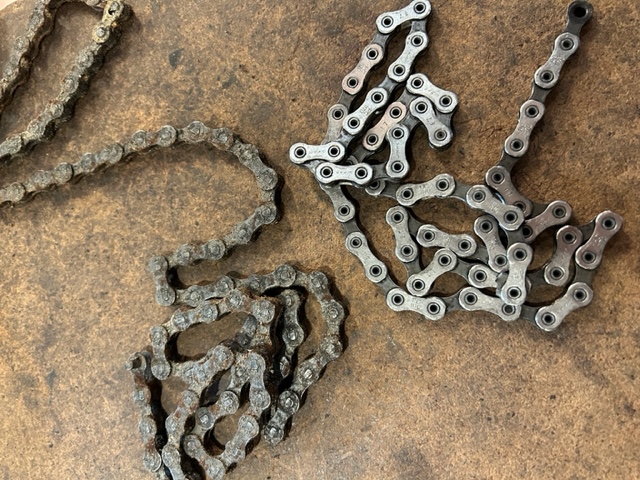
CHAIN. Sawtelle says, “Make sure the chain goes smoothly through the track and lubricate if needed.” Lubricants reject dirt and keep chains clean. Using bicycle lubricant on the chains can also prevent rust. Mack emphasizes the need to use lubricants specifically made for use on bicycle chains, as other types of lubricants may collect dirt and cause the chain to grind away at the drivetrain. Once that’s worn, it can go from a $25 fix to a few hundreds of dollars when a drivetrain needs to be replaced.
Mack also encourages a thorough check of the shift cables. With lack of use, cables can gum up. Run the bicycle through all the shifting cycles before going out on an actual ride. Notice if there is any difficulty transitioning from gear to another one. If there is, that may be one sign indicating the need to lubricate or clean the chains. If the problem continues to happen, or can’t be diagnosed, bringing your bicycle by a shop is a good idea. Proper maintenance is key.
Many bicyclers do get an annual spring inspection or full tune-up done on their bicycles. “People want an expert to look at it for peace of mind,” says Sawtelle. Bicycle mechanics are very technical and it can take a specialist to make sure the gears and brakes are good to go and all the nuts and bolts on the bike are tight to ensure everything runs smoothly for the season. Takoma Bicycle offers tune-up estimates for free.
On the contrary, Mack says, “A lot of times people are afraid to bring the bike in because they think it will be really expensive.” This is not always the case, and she encourages people to bring their bikes in just to see if there may be any issues they may not be aware of. Mack says her staff doesn’t mind if someone brings in a bike and asks the technician to look it over quickly. She said, “We like to do that and keep people riding and keep people safe.”
Helmets are also very important to use when riding a bicycle, even if it’s just around the neighborhood. Helmets have to be adjusted correctly and fit snugly around the head. This is especially crucial for growing children. Mack says the helmets should not be sitting on top of the head, they need to be around the head and, if they no longer fit like this, it’s time to get a bigger helmet.
During the cooler months of the year, if a bicycle needs a tune-up, a person can often get it back in a day or two. Of course, the warmer season extends this timeline. Mack says, “Once we start seeing temperatures in the 50s or 60s for a solid week, then the bikes come in fast.” Major repair timelines shoot up from one day to up to three weeks. Takoma Bicycle stays busy April through October, with peak months being April, May, and June.
If you are going to prepare your bike to ride in our 22 April community bicycle ride, do it today! This way, you should have time to complete the ABC Safety Check and still have time to get your bicycle into the shop and tuned up if something more extensive needs to done to prepare it for riding. We want all of our neighbors to have fun and be safe whether off or on the bicycle this year. ■
Bruce Sawtelle, Owner
7030 Carroll Avenue
Takoma Park, MD 20912
301.270.0202
takomabicycle.com
Linda Mack, Owner
8307 Dixon Avenue
Silver Spring, MD 20910
301.585.1889
silvercycles.com
© 2023 NFCCA [Source: https://nfcca.org/news/nn202304f.html]