Northwood News ♦ December 2018
Fighting Climate Change at Home
By Jennifer McGuire Cox
October’s release of the United Nations’ report on climate change highlighted the
strong risk of climate crisis as early as 2040. With the lack of leadership at the
federal level, it’s up to individuals and communities to fill the gap to
fight climate change.
Here are a few things you can do at home to help:
- Get a home energy audit. Home energy audits help determine how much energy your
home uses, as well as identify things you can do to make your home more energy-efficient. There
are many companies that perform this work for a fee and PEPCO provides a rebate of $100 when using a
trained participating contractor. Improvements you make, such as installing
energy-efficient windows and insulation, are also eligible for a federal tax credit. Don’t
want to pay anything? PEPCO offers a free Quick Home Energy Check-Up Program where a trained
analyst will come to your house, look at your home’s energy use, recommend improvements, and
install energy-saving products such as LED light bulbs, faucet aerators, and power strips.
- Go renewable. Installing solar panels on your roof is a great way to go renewable.
For homeowners who install their own panels, while costly, a solar tax credit of 30 percent is currently
available through the federal government. The State of Maryland also offers tax credits. Other
companies, such as Solar City, will install solar panels on your roof at no cost to you with the promise
of lower costs for electricity than the normal rate PEPCO charges, as well as a monthly fee for leasing
the panels. While you don’t get the full benefit of having your own panels in terms of
cost savings, it’s a good option for those who don’t have a lot of money to spend upfront
on panels.
If you can’t or don’t want to install solar panels on your roof, picking a utility company
that generates power from solar and wind sources is also something to consider. Homeowners are not
required to use PEPCO as their electricity provider, and there are many local companies that provide such
renewable energy sources.
-
Buy ENERGY STAR appliances. ENERGY STAR certified appliances use less energy than other
similar appliances. Not only does this help generate less greenhouse gas emissions, but it saves
you money on your utility bills! PEPCO and Washington Gas also provide rebates on select ENERGY STAR
purchases. Not only does ENERGY STAR certify appliances, but it also certifies building products,
including roofing materials if you’re in the market for a new roof.
- Use energy-efficient lighting. While old-fashioned incandescent light bulbs are being
phased out by the federal government, some people still use them each day. Compact fluorescent
lights, or CFLs (the light bulbs that look squiggly), while slightly more expensive to buy than
incandescents, last more than six times as long. LED light bulbs, which are the most expensive of
the three to purchase, last 20 times as long. Not only do LCD and LED lights last longer, but
they’re more efficient, using only a fraction of the energy an incandescent bulb would need for
the same amount of light. PEPCO often gives these bulbs away for free and discounts often exist
for purchasing them.
- Buy a smart thermostat. Unlike regular thermostats, “smart” thermostats learn
from your behaviors and patterns, resulting in more efficient energy use over time. They do this by
allowing owners to control the temperature of their home remotely, adjusting themselves based on current
conditions inside the home, and sense when individuals are present or absent. PEPCO provides a $100
rebate toward the purchase of a smart thermostat. If you can’t buy a new thermostat, try to at
least turn down the thermostat in the winter and turn it up in the summer when you’re not at home to
save energy.
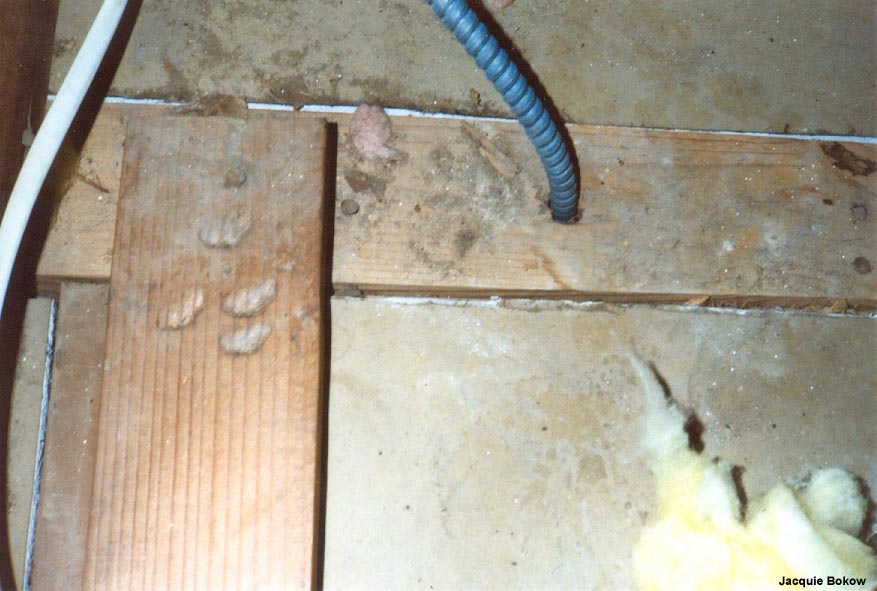
A home energy audit can reveal problems such as a shrunken top plate in an attic. These
wooden boards are installed horizontally above the studs to support the rafters. When they shrink
over time, they let cold attic seep between interior walls in winter.
- Grow less lawn, plant natives instead. Using a gas mower emits carbon. An electric
mower, while better for the environment, still uses electricity. Getting rid of part of your lawn
will lower carbon emissions and energy use. What can you do with your lawn? Planting
native plants is a great alternative. Not only will it attract wildlife to your yard, but
native plants require less maintenance and less watering. The University of Maryland Extension
Service and the Maryland Native Plant Society are
great resources for getting started! While you’re at it, think of also moving away from
gas-powered leaf-blowers, trimmers, and other yard equipment and using electric options instead.
- Caulk any cracks. Sealing any cracks around your home will cut down on your use of
air conditioning and heating. This means less overall energy being used. An easy way to
find leaks is by using a candle near suspected spots and seeing if it flickers.
- Use cooler temperatures when cleaning your clothes. Using cold water to wash your clothes
saves energy, and most laundry detergents are now made to work just as well in cold water as in hot.
Likewise, drying your clothes on a cooler setting not only helps save energy but also reduces stress on
your clothing, helping them last longer.
- Close that fireplace damper. Have a fireplace? Make sure the damper is closed
tightly when not in use. This will stop warmed or cooled air from escaping your house and
save energy.
[Jennifer McGuire Cox is a naturalist at Brookside Nature Center, Maydale Conservation Park, and Croydon Creek Nature Center. She is also a certified Maryland Master Naturalist. She lives on Belton Road.] ■