 |
Stories from the NFCCA Newsletter, the “Northwood News” |
|
Stories from the NFCCA Newsletter, the “Northwood News” |
Northwood News ♦ December 2014
Montgomery County’s adoption of the International Green Construction Code (IgCC) is about to get controversial after environmental activists discovered proposed amendments that, if passed by the County Council this fall, will essentially gut this groundbreaking piece of legislation.
Maryland was the nation’s first state to embrace the IgCC back in 2011, and now Montgomery is the first county to adopt and implement the new regulatory framework — hailed as “pro-business and pro-environment” and meant to supplant the voluntary and expensive LEED [Leadership in Energy and Environmental Design] certification as the first code to include sustainability requirements for the entire construction project and site — from design to construction, operation, maintenance, and beyond.
To ease political acceptance in local jurisdictions largely dominated by developer interests, the IgCC is just a baseline of minimum green requirements that can be strengthened by more progressive governments. Alas, our County is going another route via Department of Permitting Services, the agency responsible for implementing the Code. Instead of raising the bar or even keeping the baseline as is, the County is bent on gutting the very minimum requirements by weakening, deleting, or moving them into an appendix of project electives. The hatchet was taken to the Code’s entire sections, like Stormwater Management; Preservation of Natural Resources; Management of Vegetation, Soils, and Erosion Control; Transportation Impact; Material Selection; Building Renewable Energy Systems; etc.
Not stopping there, after drastically expanding the list of electives, the County is proposing to weaken the already voluminous appendix itself. A developer could be required to complete anywhere from zero to 16 electives for any given project, but the County is limiting that number to a disappointing two. To make matters worse, a few of these electives are already required by other County ordinances, so it is possible for a developer to comply without doing any work, rendering the electives appendix essentially meaningless and making a mockery of the IgCC’s pro-environment intent.
Approving the IgCC as proposed would be a huge setback for local efforts to save the Chesapeake Bay and address climate change at the ordinance level. In the U.S., buildings account for 65 percent of electricity consumption, 36 percent of total energy use, 30 percent of greenhouse gas emissions, 30 percent of raw materials use, 30 percent of waste output, and 12 percent of potable water consumption. At the regional level, stormwater runoff generated by development is the fastest growing source of pollution for a Chesapeake Bay already on life support.
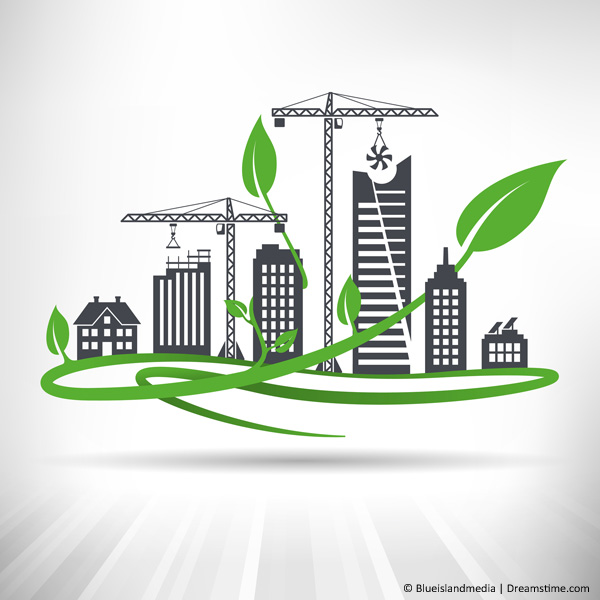
The case for green buildings is strong; numerous studies show that energy efficiency and other economic benefits can coexist with cleaner water and air while creating green jobs in a sustainable and resilient economy. If studies are not enough, we can look at real world examples like Germany that recently reached grid parity with solar power and leads the world in energy efficiency, while the U.S. is in 13th place, just ahead of Russia, Brazil, and Mexico. Green roofs have been mandated by some German municipalities for over half a century, and today the green industry in that country generates jobs in the hundreds of thousands.
Unfortunately, Montgomery County preaches the false choice mantra that you can either have a healthy economy or a healthy environment. Take the proposed Wheaton Town Center as example — the new headquarters for Park and Planning, Department of Environmental Protection, and Department of Permitting Services. Despite concerted advocacy by a coalition of civic, environmental, and business groups, the County chose a building design that fails to lead by example — to reflect the green mission of the agencies it will house or even comply with the recently approved Wheaton Sector Plan. It seems that shifting this paradigm of denial is a titanic undertaking nearly equal to facing the challenges of climate change and the Sixth Extinction themselves.
In spite of valiant efforts, once-in-a-generation opportunities to improve both our environment and economy are wasted and turned into greenwash, but the International Green Construction Code is so comprehensive and affects such a multitude of stakeholders — the sheer mass of people who care about energy efficiency and economic competitiveness, about trout in our streams, or about childhood asthma — that could be organized to turn the tide instead of just stemming the flow. For a change.
[The article originally appeared in September on WeAreMoCo, a website hosting commentary from a variety of contributors on land use, education, environmental, and other issues in Montgomery County (wearemoco.org). For more information on the IGCC, visit www.iccsafe.org. Sheveiko lives in Kensington Heights, Md.] ■
© 2014 NFCCA [Source: https://nfcca.org/news/nn201412c.html]