 |
Stories from the NFCCA Newsletter, the “Northwood News” |
|
Stories from the NFCCA Newsletter, the “Northwood News” |
Northwood News ♦ February 2012
Because asthma is so prevalent in this area and affects the health of our community in so many ways, I hope our story will spare another family from what we experienced.
When you think of prescription drug side effects, what comes to mind? A rash? Dizziness? An upset stomach perhaps? How about those appearing in the box below?
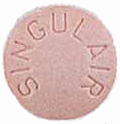
My 11-year-old daughter was prescribed Singulair for mild asthma and took it for 24 days this fall. Side effects quickly appeared as “difficult” behavior. I chalked it up to adolescence, adjustment to middle school, general contrariness. It wasn’t until she exhibited some frightening behaviors totally out of character that we made the connection with Singulair. (To respect her privacy, I won’t describe her behaviors in detail.)
Let’s look at the list of side effects [above] provided by CVS. Of the “mental/mood changes,” 10 things are listed parenthetically. No cause for alarm; what’s a little anxiety or depression? But wait, the last item in that list is suicide. Following “mental/mood changes,” the next sentence states, “A very serious allergic reaction to this drug is rare.” Does this mean that the side effects (starting with “agitation” and ending in “suicide”) are not rare?
Singulair (montelukast) is in a class of asthma medications called leukotriene receptor antagonists. It is a one-a-day pill (or granules for the infant and toddler set) prescribed for the prevention and treatment of chronic asthma/allergies. It works by blocking leukotrienes, chemicals that the body releases when you breathe in pollen, or any other type of allergen.
When Singulair came onto the market in 1998, it was seen as a life-saver for millions of adults and children with asthma. Since then, reports of life-threatening side effects have poured in. The label has been updated numerous times to include the following psychiatric side effects: bad/vivid dreams, irritability, restlessness (added in 2001), agitation, including aggressive behavior, insomnia, hallucinations (added in 2002); tremor (added March 2007), depression (added April 2007), suicidal thinking and behavior (added October 2007), anxiousness (added February 2008), hostility and somnambulism (added August 2009).
Even if you have never heard of Singulair before, the following statistics are quite interesting.
Given our recent experience, I would agree with Public Citizen’s Worstpills.org website and rate Singulair as a DO NOT USE drug, because of side effects and lack of effectiveness compared to other asthma treatments.
According to the website “Parents United for Pharmaceutical Safety and Accountability” (parentsforsafety.org): “It takes about 20 hours for Singulair to clear the bloodstream, but this does not mean that side effects will resolve in the same amount of time. It is unknown how long it takes for Singulair to be completely out of one’s system and for side effects to completely resolve and no research has been conducted to answer these questions.”
My own research led me to a number of websites, articles, and news broadcasts about Singulair. As I read through hundreds of case stories about children who suffered terrible harm from this drug, my heart broke over and over again. For some, problems didn’t show up for months, sometimes years, making the connection to Singulair harder to pinpoint. In many cases, symptoms appeared or worsened when the dosage was increased. Often times, problems cleared up shortly after stopping the drug, sometimes they persisted for much longer. Some children were misdiagnosed with ADHD, ODD, OCD, depression, Tourette Syndrome, anxiety, etc., and further medicated.
After stopping Singulair, my daughter continued to suffer side effects including, but not limited to, auditory hallucinations. As you can imagine, our lives were turned upside down by this experience. She has been off Singulair now for over two months, and seems to be almost back to normal.
Despite the number of Singulair prescriptions written (31 million in the U.S. alone), it has not been proven to be the most effective treatment for asthma and allergies.
Over the past two decades, diet and nutrition have been shown in numerous studies to help with asthma symptoms. Alternative/complementary approaches have also been shown to have a positive impact on asthma symptoms. Even the National Institutes of Health has climbed on board with its Office of Alternative Medicine; how radical is that! Acupuncture, yoga, and chiropractic all have their place in a holistic approach to the management of asthma symptoms.
In a recent discussion of placebos and alternative medicine in The New Yorker, “The Power of Nothing” author Michael Spector quotes Ted Kaptchuk, a professor at Harvard Medical School: “Anything that gets people away from the conveyor belts that move from the pharmaceutical houses to doctors and on to patients is worth considering. Anything. We need to stop pretending it’s all about molecular biology.”
Our pediatrician, a very caring, well-respected doctor, was not concerned when he prescribed Singulair to my daughter for mild asthma. There was no mention or warning of side effects. Perhaps our severe reaction to Singulair was the first case he had encountered.
More alarming still, Singulair is also prescribed to infants as young as six months old. What does this drug do to such a tiny brain? Who knows? How does an infant or toddler express the fact that he or she is having a hallucination? Feels suicidal? Wants to hurt someone else?
I find the following disturbing:
In a perfect world, every patient who takes Singulair, every physician who prescribes Singulair, and every psychologist/psychiatrist who treats patients with problems similar to the side effects of Singulair, would receive a certified letter from Merck and the FDA informing them of these highly dangerous side effects.
If anyone with an eye toward local activism in Montgomery County is interested, I’d love to talk to you. My email is [contact information redacted].
For Further Information
- Parents United for Pharmaceutical Safety and Accountability, parentsforsafety.org
- “Fox 5 Investigates: Singulair“, myfoxdc.com, news broadcast from Nov. 8, 2010
- “Raising Awareness of Singulair’s Side Effects“, causes.com, 627 members
- “Some Asthma Drugs Kill More People than Asthma: Why Is Big Pharma Allowed to Hawk Deadly Pills?“ by Martha Rosenberg, Nov. 3, 2011, alternet.org
(This article is intended for information only, not medical advice.) ■
© 2012 NFCCA [Source: https://nfcca.org/news/nn201202g.html]