 |
Stories from the NFCCA Newsletter, the “Northwood News” |
|
Stories from the NFCCA Newsletter, the “Northwood News” |
Northwood News ♦ February 2010
A number of folks noticed a debris dam that built up in the Northwest Branch this Fall. Concerned river-watchers feared it might cause problems. However, what humans consider “debris” is actually crucial to a stream’s ecosystem. When trees and logs fall into the stream, they provide structure, habitat, and food.
For example, as water moves around a tree’s rootwad, a deep, shaded pool is formed. Pools, as any fisherman will tell you, are where the fish like to hang out. Healthy Piedmont streams have a combination of features including: cascades, pools, riffles (shallow areas with a floor of rocks and pebbles), and runs of smoothly flowing deeper water. In fact, restoration of impacted streams usually includes bioengineering to replace lost structures.
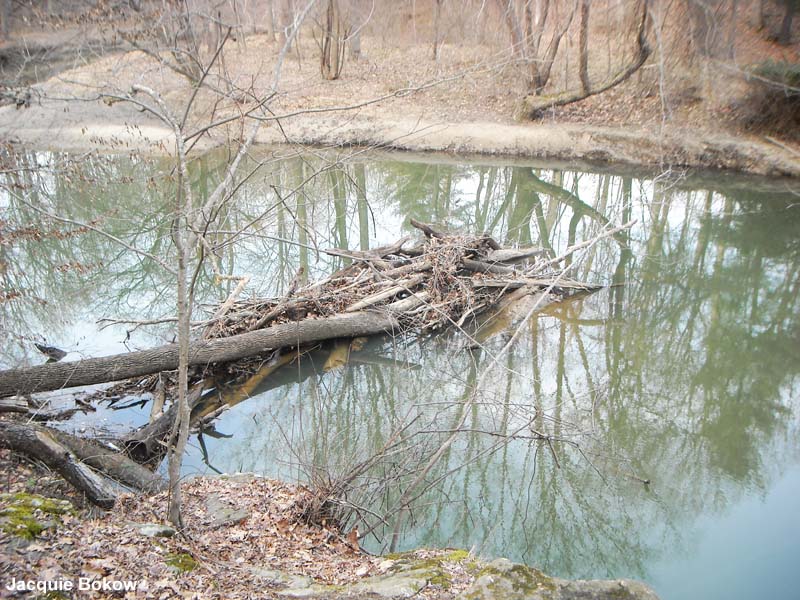
Woody debris provides both food and habitat to the algae, microbes, and macro invertebrates (critters big enough to see without a microscope). As they slowly break down the wood, it is recycled into nutrients. Predator insects feed on the little recyclers and, in turn, salamanders, fish, and frogs feed on the insects. Meanwhile, the beavers use these dams as a pantry, stocking the water with saplings for winter food.
In fact, research has proved that fish need forests and forests need fish. In the Northwest, forested streams have much healthier fish populations than streams that have been logged. In addition to providing food and habitat, trees hold back sediments and their shade keeps the water cool. More surprisingly, however, it was found that forests along salmon streams were healthier than forests along streams without a good salmon population. It turns out that as salmon return to spawn and die, they are in turn recycled as nutrients for the trees.
To put it another way, waste or debris is a purely human concept. In the natural world, resources cycle through the ecosystem, linking all the varied forms of life. Unfortunately, we humans have managed to create trash. We generate organic wastes that are too concentrated and plentiful for natural recycling. We have also created substances like plastic that can’t be absorbed into the cycle.
So, while we don’t need to worry about trees in the stream, we do need to keep out the trash. Join us for our Spring creek cleanup on Sunday, April 25 (rain date Saturday, May first) and do your part to keep the cycle going. ■
© 2010 NFCCA [Source: https://nfcca.org/news/nn201002a.html]