 |
Stories from the NFCCA Newsletter, the “Northwood News” |
|
Stories from the NFCCA Newsletter, the “Northwood News” |
Northwood News ♦ February 2009
I wouldn’t wish this chaos on anyone.
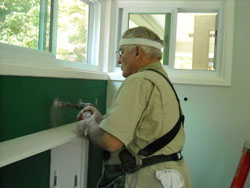
One year ago I wrote in this newsletter about adding Air-Krete brand insulation — a foam made using concrete — to our home. Doug Palmer, of Palmer Industries, Inc., in Frederick, Md., gave us a proposal for $2,940. Work commenced in September and took two days: the first to drill the holes, the second to inject the insulation and plug the holes.
Before Palmer and his associate arrived, we had to clear a three-foot perimeter inside the outer walls. Due to the small bedrooms in our home, this meant disassembling the beds, so we began sleeping downstairs in our guest bedroom. We didn’t realize it would be more than two weeks before we would return to our own bedrooms.
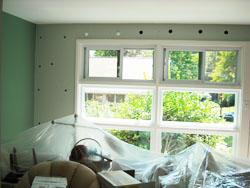
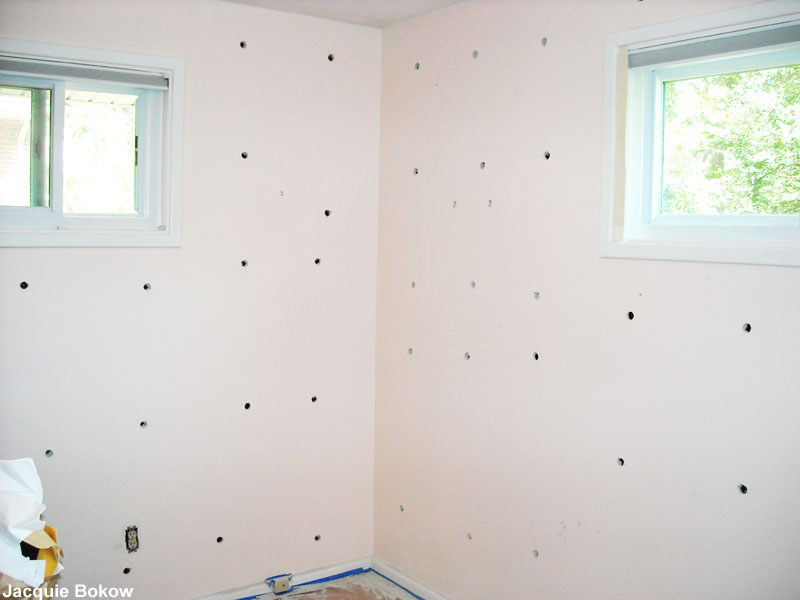
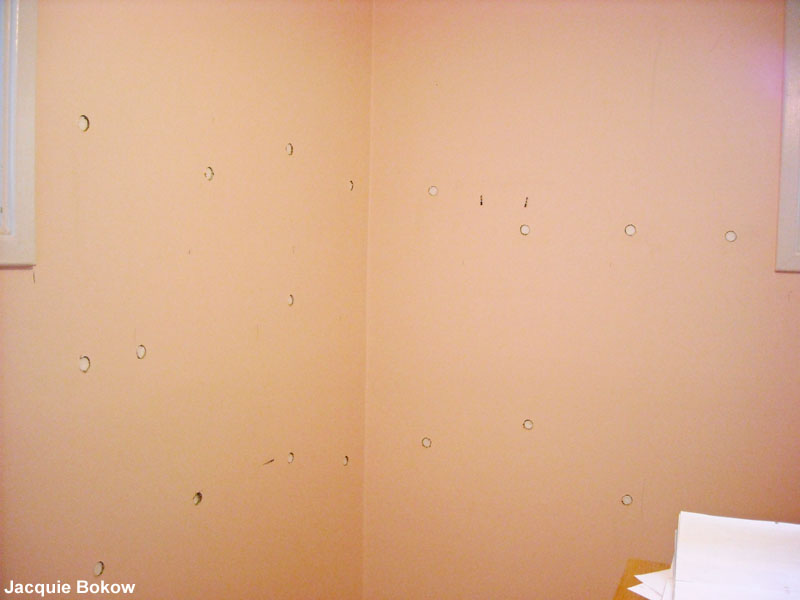
Doug’s helper began by laying down a wide sheet of plastic on the floor, taping it to the outside wall. Palmer followed behind, drilling either 1" or 2" holes into the drywall. (A larger hole was drilled if the space to be filled was larger; often the space above each of our windows was one large gap.) After drilling each hole, Doug used an electrician’s probe to find the stud (or ferring strip, in our case, which is only 1" by 2") and would drill the next hole on the other side of the “stud.” Multiple holes were then drilled between each ferring strip. It took Palmer most of the first day to drill the holes.
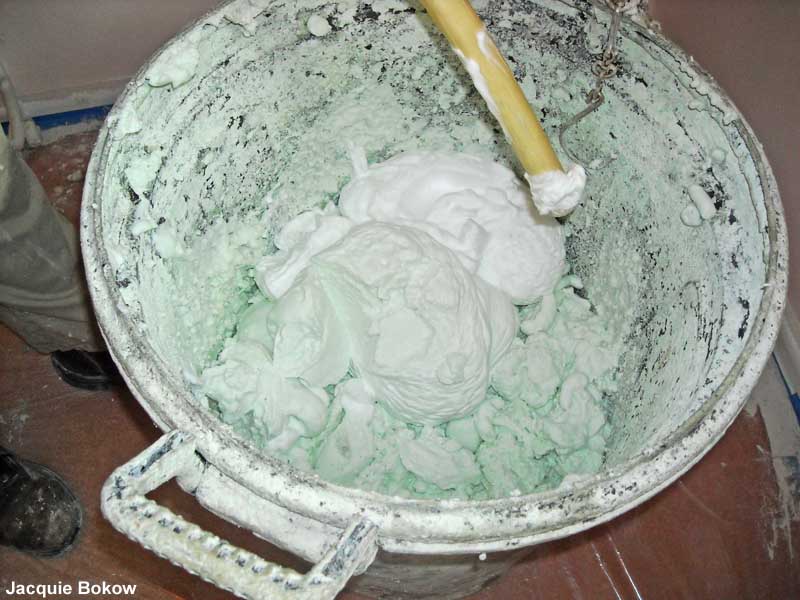
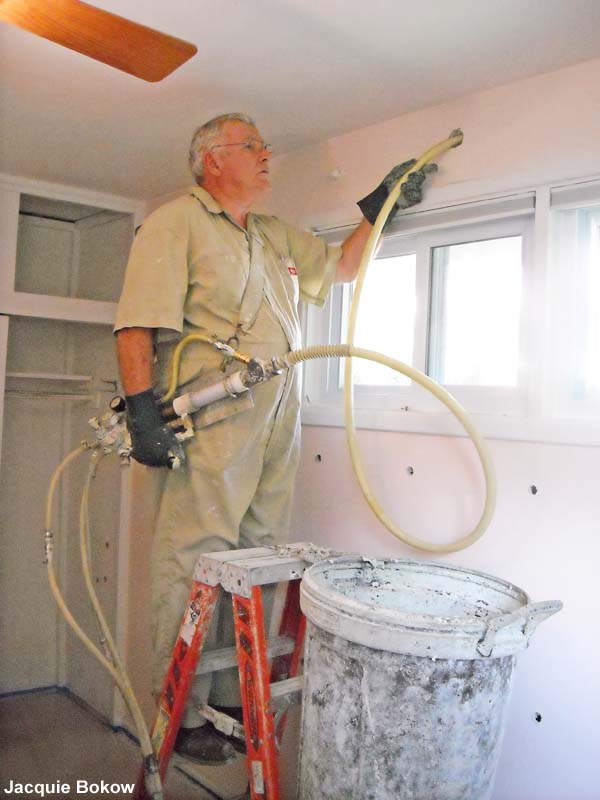
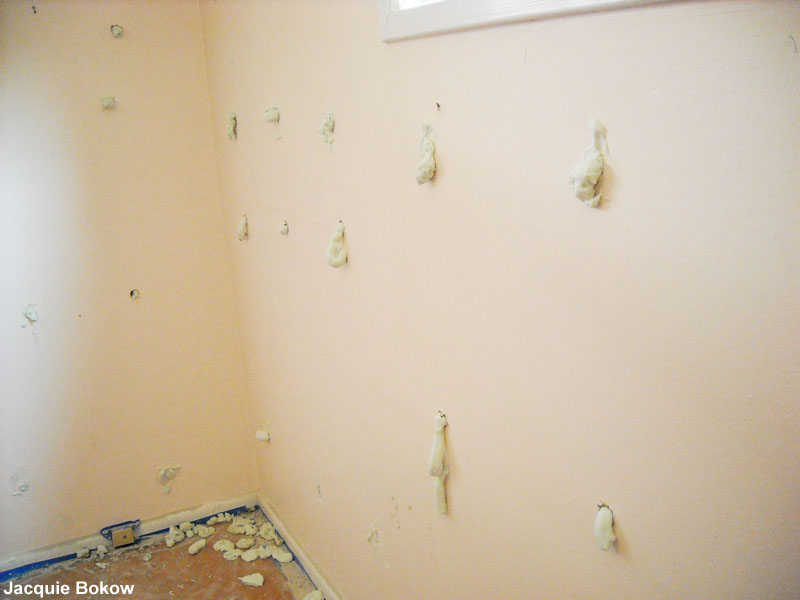
The next morning, the cement-based (“cementitious”) foam insulation was mixed up in huge vats inside Doug’s large trailer; a thick hose connected the vats to the injector Doug held. The installation took most of the day. The two men then wiped up the excess that squirted out (it wiped right up and left no stain) and placed a styrofoam plug into each hole. The plastic on the floor was rolled up and removed and the men left. Their part of the process was complete.
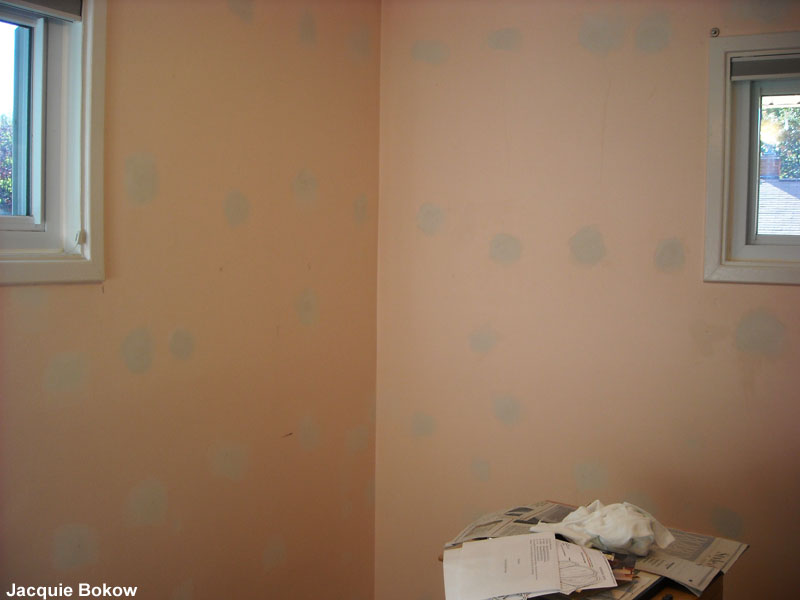
The task then fell to me to apply drywall joint tape over each hole and patch every one with joint compound. I suppose a contractor could have done this in one day, but I figured I could do it, even though I never had before. I definitely got better at it, but it did take me weeks to complete. The joint compound has to dry for 24 hours, then perhaps be touched up again (to again dry for a day), then be sanded and any dust wiped off before painting. Then I had to paint every wall!

It was 15 days before our bedrooms were habitable again; the rest of the house took longer.
Was it worth it? Yes, I think it was! Despite the upheaveal of those weeks, the house is more solid. During the week before Christmas, we were surprised to see trees waving wildly about outside; we hadn’t heard a thing.
Our energy auditor, Reuven Walder (read article on our energy audit), returned to our home to do a second blower door test to see how much just the addition of wall insulation had decreased the air leakage from the house. Walder said a house like ours should have an air infiltration rate between roughly 1,200 and 1,800 (cubic feet per minute at 50 Pascals). Previously, ours had measured more than 2,800. It is now almost exactly 1,500, so we’re “in the zone.” In fact, Walder suggested not taking any more steps to tighten our home, as we might drop below the ~˜1,200 threshold, which would require installing a mechanical fan.
[Note: Click on any photo to see a larger version.] ■
© 2009 NFCCA [Source: https://nfcca.org/news/nn200902f.html]