 |
Stories from the NFCCA Newsletter, the “Northwood News” |
|
Stories from the NFCCA Newsletter, the “Northwood News” |
The Northwood-Four Corners area — which makes up most of Precinct 13-11 — has voted strongly Democratic in election after election. The one big break in the political pattern was in 1966, when most of us voted for the Republican candidate for governor.
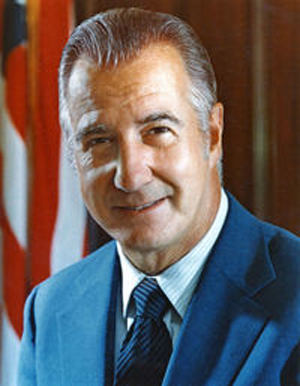
Our votes helped Spiro Agnew to a close win over Democrat George Mahoney and came close to changing the course of America’s political history.
Mahoney, a Baltimore contractor who six times had been an unsuccessful candidate for governor or senator, ran a one-issue racist campaign of opposition to laws prohibiting racial discrimination in the sale or rental of housing. Mahoney’s campaign slogan: “Your Home is Your Castle; Protect It.”
Agnew, then considered a political moderate, was the county executive of Republican-leaning Baltimore county but was little known in our part of the state. Dismayed at the primary outcome, the precinct Democratic committee refused to endorse Mahoney. With the encouragement of Precinct Chair Ken Young, a “Democrats for Agnew” Committee was quickly formed. My wife, Laura Perlman, and our Caddington Avenue neighbor, Bernard Fell, were co-chairs.
Thanks to the crossover voting pattern, Agnew carried our precinct and narrowly won statewide.
Two years later, he was Richard Nixon’s surprise pick as his vice presidential running mate. “Spiro who?” delegates asked about the little-known choice. But Agnew had been a supporter of Nixon’s rival, New York Governor Nelson Rockefeller, and his selection was intended to help unite the party.
Almost overnight, Agnew changed into a Republican pit bull. He savagely attacked his critics in the media as an “unelected elite” out of touch with the American people and eventually became something of a laughing stock. If Agnew had remained in office, it is likely that Congress would have been reluctant to elevate him to the presidency by impeaching Nixon. The Precinct 13-11 vote for governor would have helped change history.
Early in the Nixon-Agnew second term, however, the Vice President was engulfed in a federal investigation that led to criminal charges of bribery and large-scale tax evasion, from the time he was a county executive through his years as vice president.
The Watergate scandal was starting to unravel, leading to a nightmare scenario of the possible impeachment of both the President and Vice President of the United States.
But Nixon could no longer count on Agnew as a political safety net. The Vice President’s plea bargain allowed him to escape jail by paying a fine for tax evasion and promising to resign his office. Nixon made the safe choice of popular House Republican Leader Gerald Ford as the new Vice President. The Watergate scandal deepened, but Agnew was no longer around to protect Nixon from being forced out of office.
So, in the end, the votes of Precinct 13-11 didn’t really change history. But they came close.
[David L. Perlman is the father of NFCCA Treasurer Linda Perlman.] ■
© 2008 NFCCA [Source: https://nfcca.org/news/nn200810f.html]