 |
Stories from the NFCCA Newsletter, the “Northwood News” |
|
Stories from the NFCCA Newsletter, the “Northwood News” |
Ever notice how many black squirrels there are in our neighborhood? In case you missed the explanation in The Washington Post, staff writer David Fahrenthold wrote that 18 Canadian squirrels were released at the National Zoo during the presidency of Theodore Roosevelt. Unlike the native gray squirrels you still see around, the released Canadians have glossy black coats and have spread out from Washington, D.C., at least 30 miles in each direction.
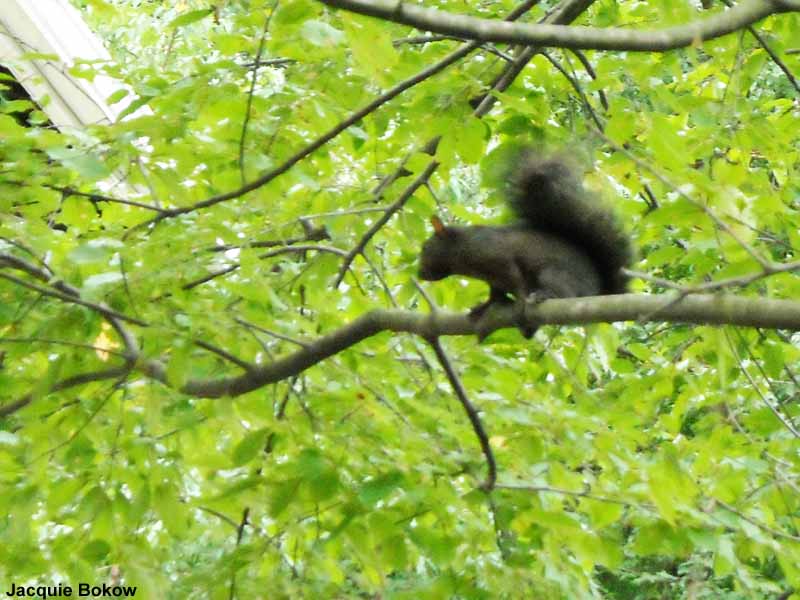
The Smithsonian archives mention that the zoo got black squirrels from the Canadian Department of Crown Lands in Ontario in both 1902 and 1906. There’s no record of exactly why they were brought to D.C., or even why they were released, although a zoo spokeswoman said the best guess is that “they were trying to restore the local population of gray squirrels, which had been decimated through hunting,” according to the article.
A black squirrel carcass at the National Museum of Natural History, labeled “Cleveland Park, 1917,” a roadkill victim, shows the immigrants had already escaped zoo grounds in a decade. Scientists say the black variety now comprises five to 25 percent of the squirrels in some metropolitan D.C. neighborhoods.
Some scientists believe the black squirrels’ dark coats allow them to retain heat from sunlight in winter, allowing them to survive more easily than the lighter common gray squirrels as they wouldn’t need as much food to stay warm.
[This article was truncated in the printed newsletter.] ■
© 2008 NFCCA [Source: https://nfcca.org/news/nn200810d.html]